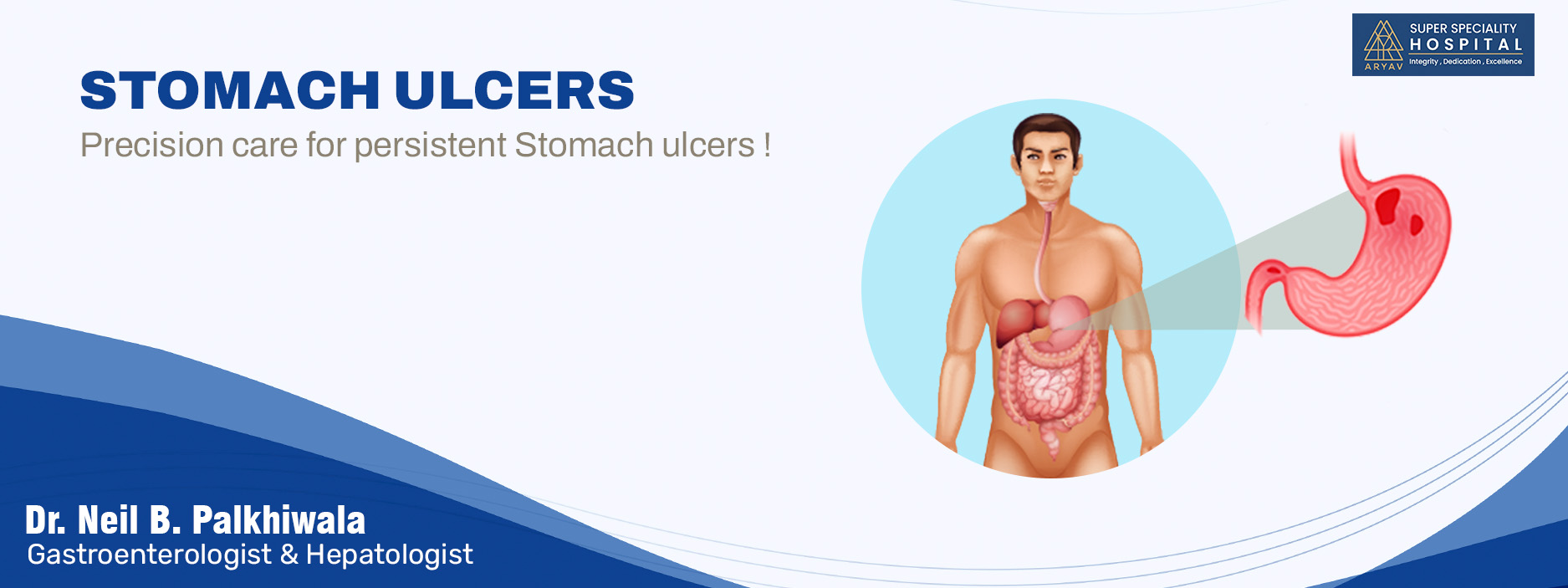
What are Stomach Ulcers?
Stomach ulcers, also known as gastric ulcers, are painful open sores that develop on the inner lining of the stomach. They occur when the protective mucus layer is damaged, allowing stomach acid to irritate and harm the stomach lining. Stomach ulcers are a type of peptic ulcer disease, which also includes ulcers that form in the upper part of the small intestine, known as duodenal ulcers.
Symptoms of Stomach Ulcers:
- Burning or gnawing pain in the upper abdomen
- Pain that may improve or worsen with eating
- Nausea or vomiting
- Bloating and feeling full easily
- Loss of appetite and weight loss
- In severe cases, vomiting blood or black stools (signs of bleeding ulcer)
Causes of Stomach Ulcers:
- Helicobacter pylori (H. pylori) infection: A common bacterial infection that damages the stomach lining.
- Long-term use of NSAIDs: Medicines like aspirin and ibuprofen can irritate or damage the stomach lining.
- Excess stomach acid: Due to stress, smoking, or certain foods.
- Other factors: Smoking, alcohol, and stress can worsen ulcers.
How to Diagnose Stomach Ulcers?
- Endoscopy: A thin tube with a camera is inserted down the throat to view the stomach lining.
- H. pylori tests: Blood, stool, or breath tests detect infection.
- Barium swallow X-ray: Less commonly used to see ulcers on imaging.
Treatment Options for Stomach Ulcers:
- Antibiotics: To clear H. pylori infection if present.
- Proton pump inhibitors (PPIs): Medicines that reduce stomach acid and promote healing.
- Avoiding NSAIDs: Or using safer alternatives under doctor guidance.
- Lifestyle changes: Avoid smoking, alcohol, and spicy foods.
Dr. Neil Palkhiwala - Stomach Ulcer Specialist Doctor in Ahmedabad
Stomach ulcers can result from infections, medications, or underlying digestive disorders. Early diagnosis and appropriate treatment help prevent complications such as bleeding. For comprehensive evaluation, patients often rely on the best Gastroenterologist in Ahmedabad to guide ulcer management and recovery.
Frequently Asked Questions
Stomach ulcers, also called peptic ulcers, are open sores that develop on the inner mucosal lining of the stomach (gastric ulcers) or the upper portion of the small intestine (duodenal ulcers) when protective digestive mucus layer is damaged.
The two leading causes are infection with Helicobacter pylori (H. pylori) bacteria and long term or frequent use of nonsteroidal anti inflammatory drugs (NSAIDs) such as aspirin, ibuprofen, or naproxen. Stress and spicy foods aggravate symptoms but do not directly cause ulcers.
The hallmark symptom is a burning or gnawing stomach pain in the upper abdomen, often occurring between meals or at night. Other symptoms include bloating, feeling full quickly, belching, heartburn, nausea, and intolerance to fatty foods.
Upper GI Endoscopy (gastroscopy) is the gold standard diagnostic test. It allows the gastroenterologist to directly visualize the ulcer, assess healing, check for complications, and collect gastric mucosal biopsies to test for H. pylori infection or cellular dysplasia.
H. pylori infection is treated with H. pylori eradication therapy, combining two potent antibiotics with a Proton Pump Inhibitor (PPI) acid suppressor taken daily for 10 to 14 days to permanently eradicate the bacteria and allow mucosal healing.
Untreated ulcers can lead to serious gastrointestinal complications, including severe internal GI bleeding (causing vomiting blood or tarry black stools), gastric wall perforation, peritonitis, and gastric outlet obstruction due to inflammatory scarring.
Prevention involves completing full antibiotic courses for H. pylori eradication, avoiding or minimizing NSAID pain relievers under medical guidance, eliminating tobacco smoking, moderating alcohol consumption, and managing psychological stress.
You should consult Dr. Neil Palkhiwala if you suffer from persistent upper stomach pain, unexplained indigestion, or emergency symptoms like vomiting blood, black stools, or severe sudden stomach pain for immediate diagnostic gastroscopy.