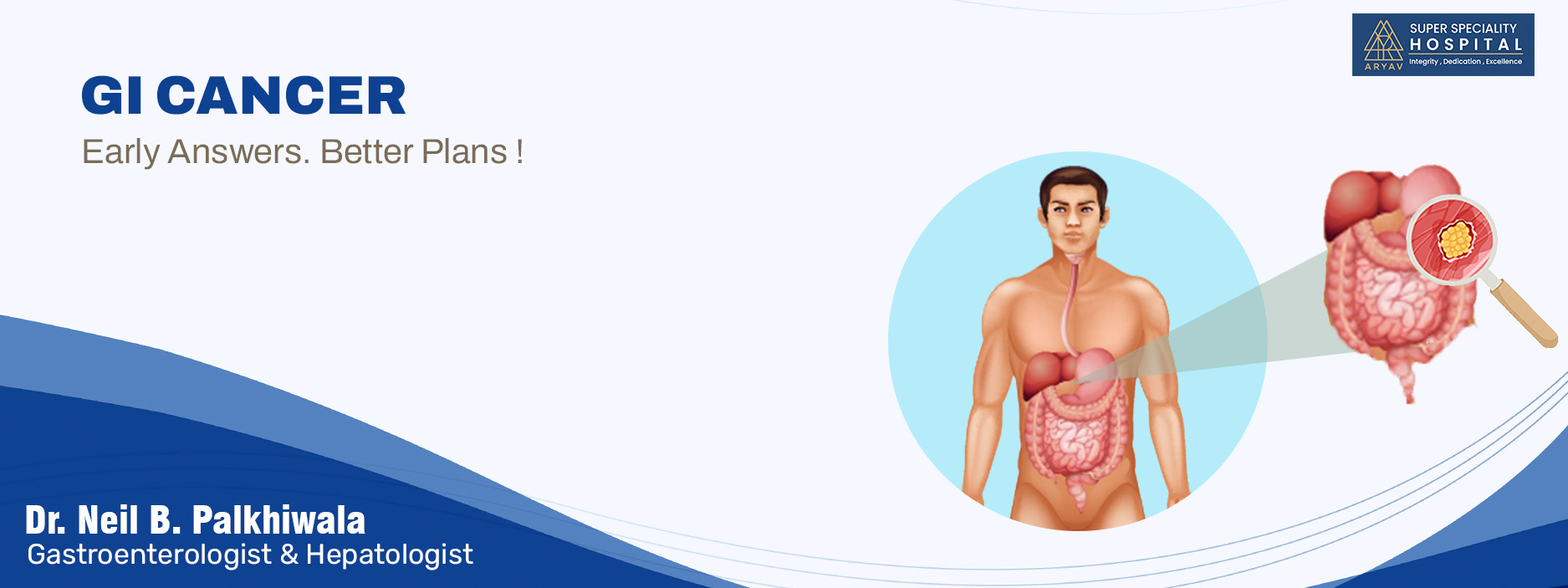
GI Cancer Treatment in Ahmedabad

Clearing the Path to Digestive Comfort

GI Cancer Treatment

What is GI Cancer?

Gastrointestinal (GI) cancer refers to cancers that occur anywhere along the digestive tract and associated organs. This includes cancers of the esophagus, stomach, liver, pancreas, small intestine, colon, rectum, and anus.

Types of GI Cancer:

  • Esophageal cancer: Affects the food pipe
  • Stomach cancer: Develops in the stomach lining.
  • Liver cancer: Originates in the liver cells.
  • Pancreatic cancer: Starts in the pancreas.
  • Colorectal cancer: Occurs in the colon or rectum.
  • Anal cancer: Occurs in the anus.

Symptoms of GI Cancer:

  • Abdominal pain or discomfort
  • Unexplained weight loss
  • Changes in bowel habits
  • Blood in stool or vomit
  • Difficulty swallowing (for esophageal cancer)
  • Jaundice in liver or pancreatic cancer

Causes of GI Cancer:

  • Genetic predisposition
  • Chronic inflammation (such as from IBD)
  • Smoking and alcohol consumption
  • Poor diet and obesity
  • Infections like Helicobacter pylori or hepatitis viruses

How Is GI Cancer Diagnosed?

  • Medical History & Exam: Review symptoms like pain, bleeding, and weight loss; physical check for signs such as jaundice.
  • Blood Tests: Check anemia, liver function, and tumor markers.
  • Imaging: CT scan, MRI, and ultrasound to locate tumors and assess spread.
  • Endoscopy & Biopsy: Visual inspection and tissue samples to confirm cancer under a microscope.

Treatment Options for GI Cancer

  • Surgery: Removing the tumor or affected organ parts.
  • Chemotherapy: Drugs to kill or shrink cancer cells.
  • Radiation Therapy: Using radiation to destroy cancer cells.
  • Targeted Therapy & Immunotherapy: Advanced drugs that attack cancer specifically.

Dr. Neil Palkhiwala - GI Cancer Treatment Specialist

GI cancers require early detection and multidisciplinary management for optimal outcomes. Advanced endoscopy and imaging assist in accurate staging. Patients diagnosed with gastrointestinal malignancies often consult the best Gastroenterologist in Ahmedabad for expert evaluation and coordinated care.

Frequently Asked Questions

GI cancers include malignancies of the esophagus, stomach, small intestine, colon and rectum, liver, gallbladder, bile ducts, and pancreas. Each has its own risk factors, symptoms, and treatment approaches.

Common red flags include unexplained weight loss, persistent abdominal pain, a notable change in bowel habits, difficulty swallowing, blood in the stool, and persistent nausea or vomiting. Never ignore these symptoms as early detection is key.

Colorectal cancer is one of the most preventable cancers. Regular colonoscopy screening detects and removes pre-cancerous polyps before they become malignant. A high-fiber diet, physical activity, avoiding smoking and excessive alcohol, and a healthy weight all significantly reduce risk.

Endoscopy allows direct visualization and biopsy of tumors. Upper GI endoscopy examines the esophagus, stomach, and duodenum. Colonoscopy is essential for colorectal cancer. Endoscopic Ultrasound (EUS) enables precise local staging of esophageal, gastric, and pancreatic tumors.

Cancer staging (Stage I to IV) describes how far the cancer has spread. It directly determines the treatment plan. Early-stage GI cancers are often curable with surgery, while advanced stages require combinations of chemotherapy, radiation, or targeted therapies.

Risk factors include age over 50, family history of GI cancer, chronic inflammatory conditions like ulcerative colitis or Barrett's esophagus, H. pylori infection, obesity, heavy alcohol consumption, smoking, and a diet high in processed and red meats.

Very early-stage surface cancers can sometimes be removed endoscopically. More advanced cancers typically require surgery combined with chemotherapy and radiation. Targeted therapy and immunotherapy are increasingly used for specific cancer subtypes.

For average-risk individuals, a colonoscopy every 10 years starting at age 45 to 50 is recommended. Those with a first-degree relative diagnosed before age 60 should begin at 40, with colonoscopies every 5 years. High-risk patients with genetic syndromes need even more frequent screening.