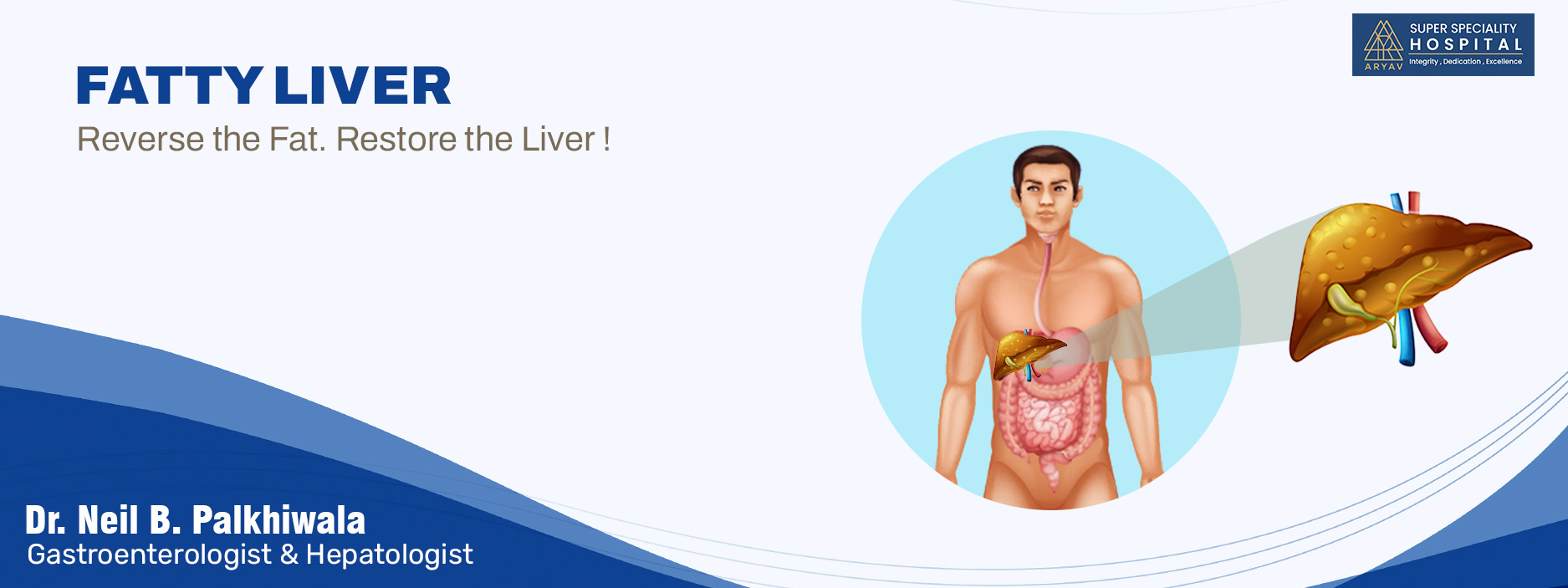
Fatty Liver Treatment in Ahmedabad

Clearing the Path to Digestive Comfort

Fatty Liver Treatment

Fatty Liver

Fatty liver, also known as hepatic steatosis, occurs when excess fat accumulates in the liver cells. It is increasingly common due to rising rates of obesity, diabetes, and sedentary lifestyles. Fatty liver is categorized into two types: Non-Alcoholic Fatty Liver Disease (NAFLD) (not related to alcohol use) and Alcoholic Fatty Liver Disease (AFLD) (caused by excessive alcohol consumption).

Symptoms of Fatty Liver :

Fatty liver often develops silently, especially in its early stages. Many people may not experience any symptoms. However, as the condition progresses, the following signs may appear:

  • Fatigue – Feeling unusually tired or weak.
  • Discomfort or Pain in the Upper Right Abdomen
  • Weight Loss & Loss of Appetite
  • Abdominal Bloating – Feeling of fullness or swelling.
  • Mild Jaundice – Yellowing of the skin or eyes in advanced stages.
  • Swelling in Legs or Abdomen & Confusion (in severe cases)

Causes of Fatty Liver:

Fatty liver develops when the body produces too much fat or doesn’t metabolize fat efficiently. Common causes include:

  • Obesity & Excess body fat
  • Type 2 Diabetes & Insulin Resistance
  • High Cholesterol or Triglycerides
  • Excessive Alcohol Consumption
  • Rapid Weight Loss or Sedentary Lifestyle
  • Certain Medications, PCOS, and Genetic Factors

Diagnosis of Fatty Liver :

1. Medical Exam
  • Liver Function Tests (ALT, AST)
  • Lipid Profile & Blood Sugar
2. Imaging Tests
  • Ultrasound
  • FibroScan (Fat & stiffness)
  • CT/MRI
3. Liver Biopsy
  • Done if diagnosis is unclear or advanced disease is suspected.

Treatment Options of Fatty Liver :

  • Diet & Exercise: Healthy diet low in fats and sugars. Regular exercise and weight loss.
  • Manage Underlying Conditions: Control diabetes, cholesterol, and blood pressure.
  • Avoid Alcohol: Essential to prevent further liver damage.
  • Medications: Currently, no specific drugs approved; treatment focuses on associated conditions.

Dr. Neil Palkhiwala - Fatty Liver Disease Specialist

Fatty liver disease is increasingly common and often linked to lifestyle and metabolic factors. Early diagnosis helps prevent progression to advanced liver disease. Patients managing fatty liver conditions frequently consult the best Gastroenterologist in Ahmedabad for structured treatment and monitoring.

Frequently Asked Questions

Fatty liver disease is a condition where excess fat accumulates in liver cells. People at highest risk include those with obesity, type 2 diabetes, high cholesterol, metabolic syndrome, or a sedentary lifestyle. It is increasingly common in urban populations.

Simple fatty liver is often completely silent and discovered incidentally on an ultrasound. However, once it progresses to NASH (Non-Alcoholic Steatohepatitis), which involves inflammation, you may experience fatigue, a dull aching in the upper right abdomen, and an enlarged liver.

Yes, simple fatty liver and early-stage NASH can be completely reversed. The most effective treatment is structured lifestyle intervention: a calorie-controlled diet, regular aerobic exercise, and achieving a 7 to 10 percent reduction in body weight. Early action leads to the best outcomes.

NASH (Non-Alcoholic Steatohepatitis) is the more severe, inflammatory form of fatty liver disease involving fat accumulation plus liver cell damage. NASH significantly elevates the risk of progressing to liver fibrosis, cirrhosis, and potentially liver cancer. Early identification and treatment are critical.

An abdominal ultrasound can detect fat in the liver. For precise staging and to rule out fibrosis, a FibroScan (liver elastography) is the most accurate non-invasive test available. Liver function blood tests and metabolic panel are also essential for a complete evaluation.

A Mediterranean-style diet is most effective: vegetables, fruits, whole grains, lean proteins, and healthy fats. Eliminating sugary beverages, ultra-processed foods, refined carbohydrates, and completely abstaining from alcohol are equally critical steps.

Yes, there is a strong bidirectional relationship. Insulin resistance directly promotes fat deposition in the liver, and conversely, fatty liver worsens insulin resistance. Tight blood glucose control through medication and lifestyle changes is a critical component of managing NAFLD in diabetic patients.

Patients making lifestyle changes should have a follow-up ultrasound and blood tests every 6 to 12 months. Those with confirmed NASH or early fibrosis require FibroScan every 6 months. Regular monitoring is essential to track regression or catch any progression early.