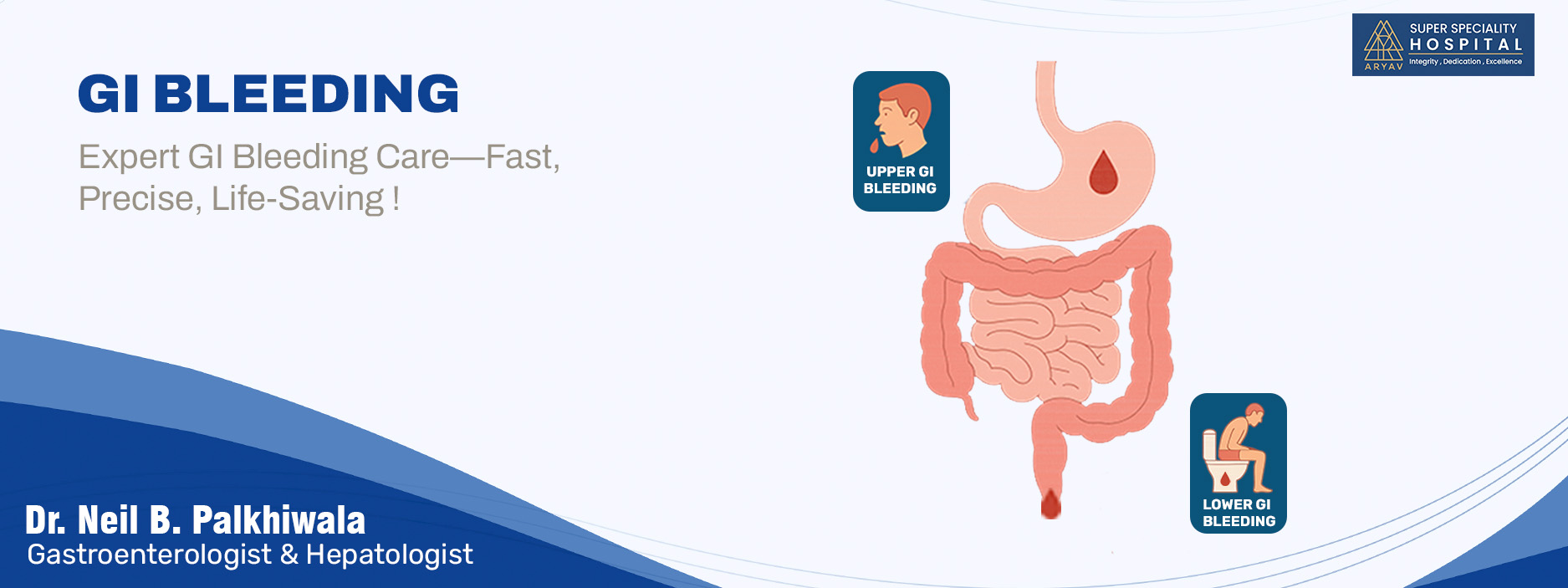
GI Bleeding Treatment in Ahmedabad

Clearing the Path to Digestive Comfort

GI Bleeding Treatment

GI Bleeding

Gastrointestinal (GI) bleeding refers to any form of bleeding that occurs in the digestive tract, which includes the esophagus, stomach, small intestine, large intestine (colon), rectum, and anus. It can range from mild to severe and may appear as blood in vomit, black or tarry stools, or visible red blood in the stool.

Causes of GI Bleeding:

Upper GI bleeding

Often caused by ulcers, gastritis, esophageal varices, or tears in the esophagus (Mallory-Weiss tears).

Lower GI bleeding

Common causes include hemorrhoids, diverticulosis, colitis, Crohn’s disease, polyps, or colorectal cancer.

Symptoms of GI Bleeding:

  • Vomiting blood
  • Black, tarry stools (melena)
  • Bright red blood in stool
  • Dark-colored stools
  • Abdominal pain or cramping
  • Fatigue or weakness
  • Shortness of breath & Dizziness
  • Pale skin or paleness
  • Low blood pressure (severe cases)
  • Unexplained anemia

Diagnosis of GI Bleeding:

  • Endoscopy or Colonoscopy – to locate and possibly treat the bleeding source.
  • Capsule Endoscopy – for bleeding in the small intestine.
  • CT Scans or Angiography – in complex or active bleeding cases.

Treatment of GI Bleeding:

Treatment depends on the source and severity of bleeding and may include:

  • Endoscopic procedures to stop bleeding (e.g., clipping, cauterization)
  • Medication to reduce stomach acid or treat underlying disease
  • Surgery or interventional radiology in severe cases

Dr. Neil Palkhiwala - GI Bleeding Specialist in Ahmedabad

Gastrointestinal bleeding can range from mild to life-threatening and requires prompt evaluation. Endoscopic diagnosis plays a key role in identifying the source of bleeding. Patients experiencing GI bleeding often seek care from the best Gastroenterologist in Ahmedabad for timely diagnosis and intervention.

Frequently Asked Questions

Warning signs include vomiting blood or passing black tarry stools (upper GI) or bright red blood in the stool (lower GI). Accompanying symptoms like dizziness, weakness, pale skin, and a drop in blood pressure signal significant blood loss requiring immediate care.

The most common causes include peptic ulcers, esophageal varices (enlarged veins from liver cirrhosis), Mallory-Weiss tears caused by forceful vomiting, gastritis, and esophagitis from chronic acid reflux.

Common causes include diverticular disease, hemorrhoids, colorectal polyps or cancer, ischemic colitis, inflammatory bowel disease (Crohn's disease or ulcerative colitis), and angiodysplasia (abnormal blood vessels in the bowel wall).

Diagnosis starts with blood tests. An upper GI endoscopy is the first-line investigation for suspected upper bleeding, while a colonoscopy is used for suspected lower GI bleeding. Capsule endoscopy or CT scans may be needed for obscure sources.

Endoscopy can both diagnose and stop bleeding using injection of epinephrine, heat or electrical cauterization, small metal clips to compress the bleeding point, or rubber band ligation for varices. This minimally invasive approach avoids surgery in most cases.

GI bleeding is a medical emergency when it causes a significant drop in blood pressure, rapid heart rate, confusion, or severe weakness. Massive blood loss requires immediate hospitalization, urgent endoscopy, blood transfusions, or emergency surgery.

Yes, NSAIDs like ibuprofen and aspirin can damage the stomach lining and cause ulcers. Blood thinners (anticoagulants) and corticosteroids also significantly increase bleeding risk, especially when used long-term without gastric protection.

Prevention depends on treating the underlying cause. For peptic ulcers, eradicate H. pylori and stop NSAIDs. For variceal bleeding, use beta-blockers and regular endoscopic surveillance. For colorectal causes, regular colonoscopy screening and polyp removal is preventive.