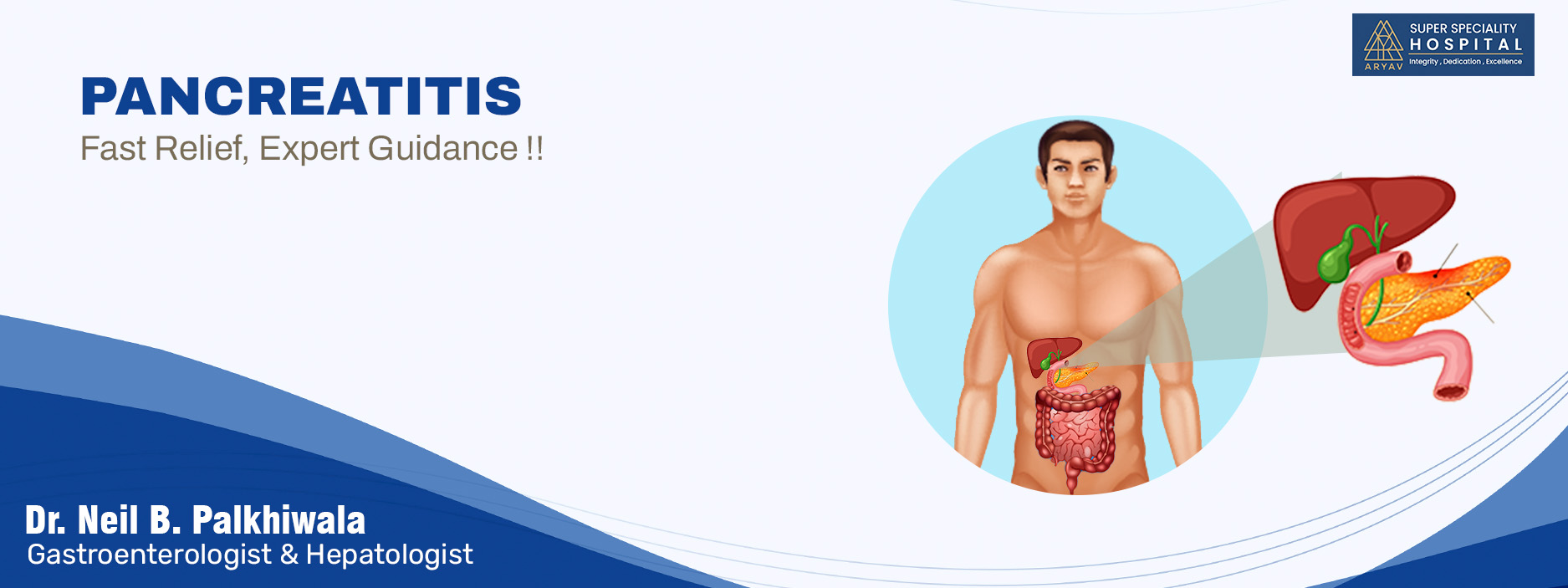
What is Pancreatitis?
Pancreatitis is the inflammation of the pancreas, an organ behind the stomach that helps with digestion and blood sugar regulation. It can occur suddenly (acute pancreatitis) or develop gradually over time (chronic pancreatitis).
Symptoms of Pancreatitis:
- Severe upper abdominal pain that may radiate to the back
- Nausea and vomiting
- Fever & Rapid pulse
- Swollen and tender abdomen
Causes of Pancreatitis:
- Gallstones blocking pancreatic ducts
- Excessive alcohol consumption
- Certain medications & High triglyceride levels
- Infections or abdominal trauma
- Genetic factors
Diagnosis of Pancreatitis:
- Blood tests, including amylase, lipase, liver function, and kidney function, help confirm pancreatitis and detect related complications.
- Imaging tests, such as ultrasound, CT scan, MRI/MRCP, and ERCP, help detect pancreatic inflammation, gallstones, bile duct obstruction, and related complications.
- Physical exam & symptoms – Severe upper abdominal pain, nausea, and vomiting.
Treatment of Pancreatitis:
- Hospitalization for hydration, pain control, and fasting to rest the pancreas
- Treating underlying causes like gallstones or alcohol use
- Nutritional support and lifestyle changes
- In severe or chronic cases, surgery or advanced interventions may be needed
Dr. Neil Palkhiwala - Pancreatitis Specialist
Pancreatitis requires careful evaluation to identify underlying causes and prevent recurrence. Management focuses on symptom control and addressing risk factors. Patients with pancreatic disorders often seek care from the best Gastroenterologist in Ahmedabad for accurate diagnosis and long-term management.
Frequently Asked Questions
Pancreatitis is inflammation of the pancreas, the gland that produces digestive enzymes and insulin. It occurs in two main forms: Acute Pancreatitis, a sudden episode that can range from mild to life threatening, and Chronic Pancreatitis, long term irreversible inflammatory damage.
The most common causes are gallstones blocking the pancreatic duct (gallstone pancreatitis) and chronic excessive alcohol consumption. Other causes include high blood triglyceride levels, elevated blood calcium, abdominal trauma, autoimmune conditions, genetic factors, and certain medications.
Symptoms include severe upper abdominal pain that penetrates through to the back, pain that worsens after eating fatty meals, nausea, vomiting, abdominal tenderness, fever, rapid pulse, and in severe cases, jaundice or fluid accumulation (ascites).
Diagnosis involves elevated serum amylase and lipase blood levels, abdominal CT or EUS scans. Acute pancreatitis treatment requires hospital admission, intensive IV fluid hydration, bowel rest, pain control, and addressing underlying causes like gallstones via ERCP.
Chronic pancreatitis can cause irreversible damage leading to exocrine pancreatic insufficiency (inability to digest food, leading to weight loss and oily stools), endocrine failure (diabetes mellitus), pancreatic pseudocysts, ductal strictures, and pancreatic stones.
ERCP (Endoscopic Retrograde Cholangiopancreatography) is used to perform urgent biliary sphincterotomy to clear gallstones blocking the pancreatic duct in acute gallstone pancreatitis, as well as to stent strictures and drain pseudocysts.
Recovery requires an ultra low fat diet, eating small frequent meals, maintaining high fluid intake, taking prescribed pancreatic digestive enzyme supplements (PERT), and completely avoiding alcohol and tobacco.
You must seek immediate emergency medical care if you experience sudden, severe upper abdominal pain radiating to your back, accompanied by fever, persistent vomiting, or yellowing of the eyes and skin.