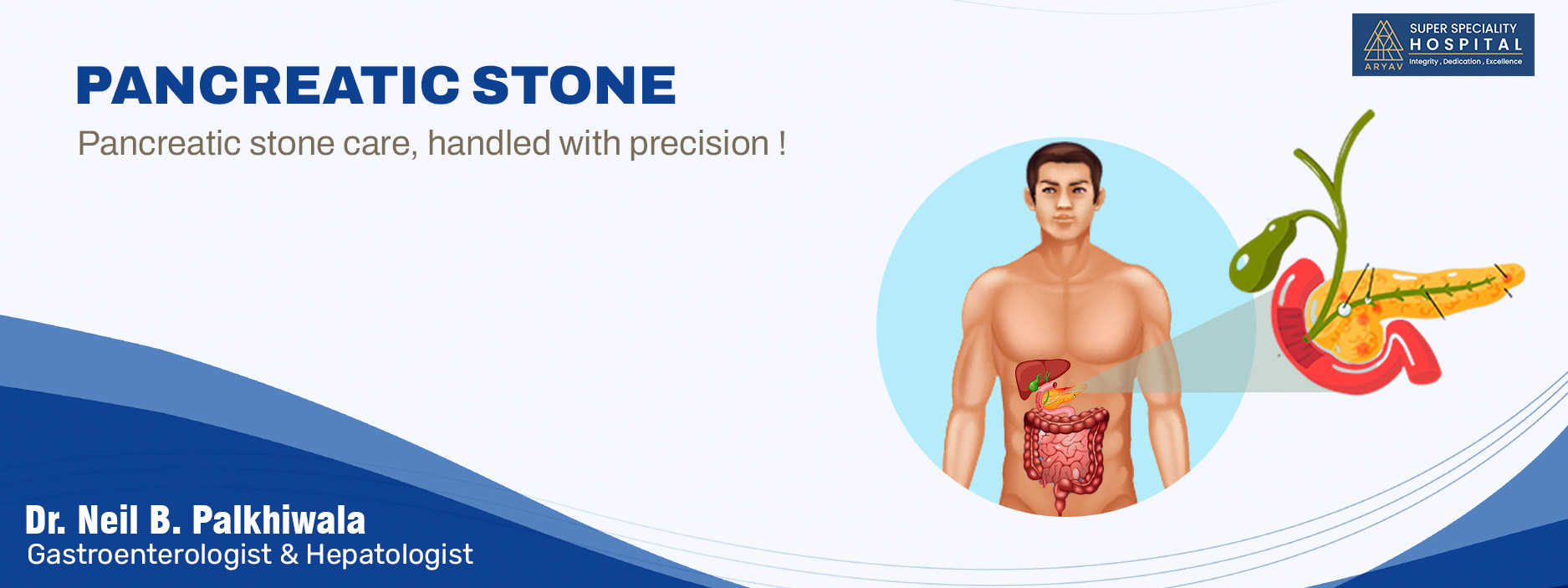
Pancreatic Stone

End the Pain, Restore Your Pancreatic Function

Pancreatic-Stone

Pancreatic Stone

Pancreatitis stones, also known as pancreatic duct stones, are hardened deposits that form in the pancreatic ducts — the tubes that carry digestive enzymes from the pancreas to the small intestine. These stones are most commonly seen in patients with chronic pancreatitis, a long-term inflammation of the pancreas.

Symptoms of Pancreatitis Stone:

Causes of Pancreatitis Stone:

How to Diagnose Pancreatitis Stone ?

Pancreatic stones can be detected using:

Treatment Options:

Dr.Neil Palkhiwala- Pancreatitis Stone Treatment Specialist in Ahmedabad

Dr. Neil Palkhiwala offers advanced diagnostic and therapeutic endoscopy techniques, including ERCP and EUS, to manage pancreatic stones effectively, providing relief from symptoms and preventing further complications.
Schedule your Pancreatitis Stone care with Dr. Neil Palkhiwala- Director and Head Aryav Multispeciality Hospital, Ahmedabad . Call us to book your appointment or ask any questions to +91 91069 95254


Frequently Asked Questions

Which doctor to consult for pancreatic stones?
For pancreatic stones, you should consult a gastroenterologist, who specializes in digestive system disorders. In complex cases requiring surgical intervention, a gastrointestinal surgeon may also be involved. Specialists like Dr. Neil Palkhiwala in Ahmedabad provide diagnosis, treatment, and advanced care for pancreatic stone management.
Yes, a stone in the pancreas can be serious if not treated on time. Pancreatic stones may block the flow of digestive juices, leading to severe abdominal pain, nausea, vomiting, and complications such as pancreatitis or infection. Early diagnosis and proper treatment by a gastroenterologist are important to prevent long-term damage.
Pancreatic stones are typically removed using endoscopic or surgical procedures. Endoscopic techniques, such as Endoscopic Retrograde Cholangiopancreatography (ERCP), allow doctors to extract stones or break them using specialized tools. In more severe cases, surgery may be required to remove stones or relieve blockages. Treatment is tailored by a gastroenterologist based on the size, location, and severity of the stones.
Pancreatic stones are diagnosed through a combination of imaging tests and clinical evaluation. Common tests include ultrasound, CT scan, MRI, and Endoscopic Retrograde Cholangiopancreatography (ERCP). A gastroenterologist may also review symptoms such as abdominal pain, nausea, or digestive issues to confirm the presence of stones and plan the appropriate treatment.