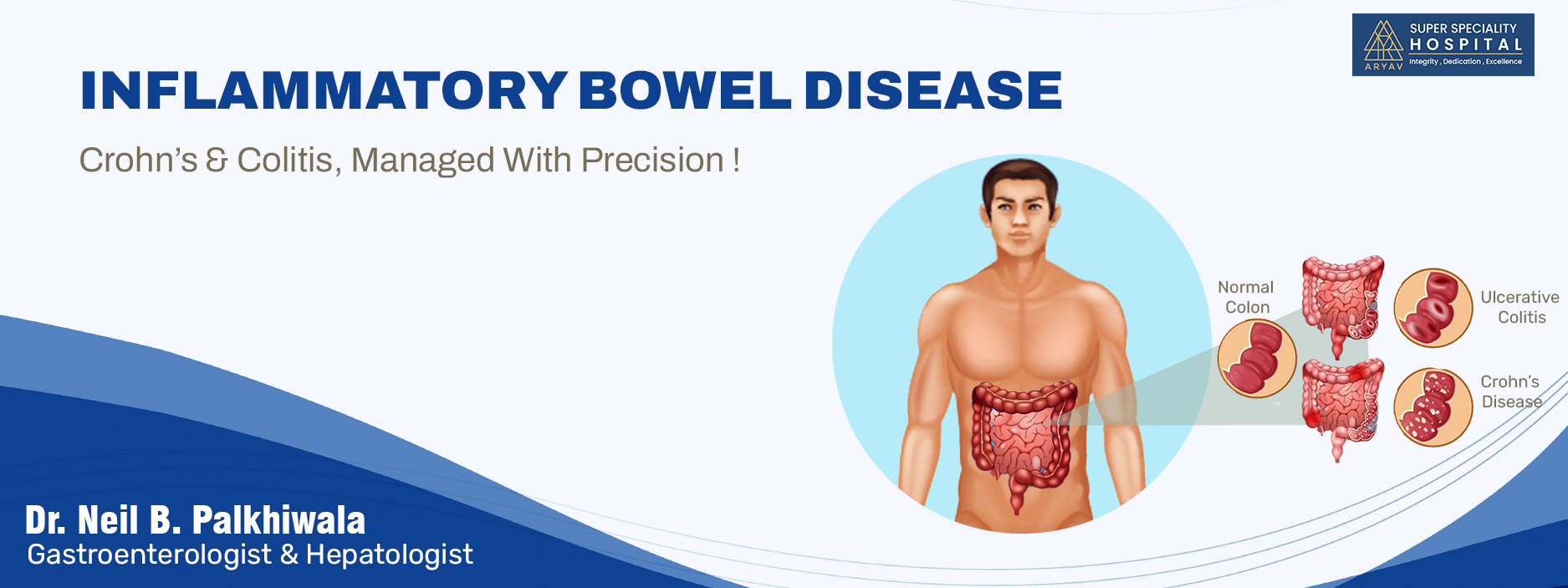
Inflammatory Bowel Disease
Inflammatory Bowel Disease (IBD) is a chronic, relapsing condition characterized by inflammation of the gastrointestinal (GI) tract, affecting digestion, absorption, and overall gut health. It primarily includes two major conditions: Crohn’s Disease and Ulcerative Colitis. While both cause inflammation, they differ in location, depth, and presentation.
Symptoms of Inflammatory Bowel Disease (IBD) :
Types of IBD:
1. Crohn’s Disease
2. Ulcerative Colitis
How is Irritable Bowel Syndrome (IBS) Diagnosed?
Diagnosis involves a combination of clinical evaluation, laboratory and imaging tests:
If you experience symptoms like unexplained weight loss, bleeding, persistent diarrhea, or
severe pain, your doctor will investigate further to rule out other serious diseases.
What Are The Treatment Options for IBD ?
IBD has no permanent cure, but it can be effectively managed with:
1. Medications
2. Dietary & Lifestyle Changes
3. Surgery
Long-Term Monitoring:
Dr.Neil Palkhiwala- Inflammatory Bowel Disease Specialist in Ahmedabad
Dr. Neil Palkhiwala provides comprehensive and compassionate care for IBD patients. With advanced skills in diagnostic colonoscopy, capsule endoscopy, and therapeutic procedures, he ensures timely diagnosis, effective treatment, and ongoing disease management tailored to each patient’s unique needs.
Schedule your gastrointestinal (GI) tract care with Dr. Neil Palkhiwala- Director and Head Aryav Multispeciality Hospital, Ahmedabad . Call us to book your appointment or ask any questions to +91 91069 95254